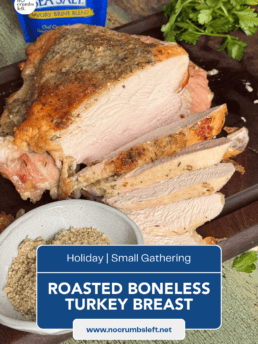
Boneless Turkey Breast (Oven Roasted)
This boneless turkey breast is everything you want from a holiday roast. Roasted low and slow to allow all of the flavors to soak into the turkey, the result is a perfectly juicy main dish for your smaller holiday gathering!
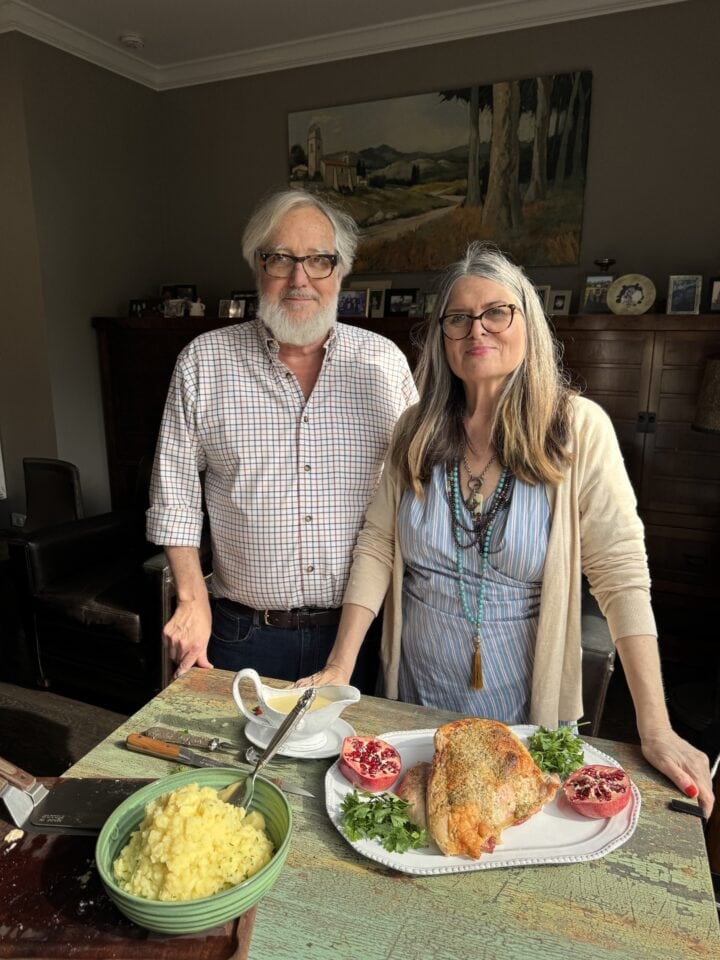
A Note from Teri on Boneless Turkey Breast
A boneless breast half is exactly the right amount for a smaller gathering, and it roasts in a fraction of the time, but it doesn’t feel like a compromise.
The turkey expert, Roy, came in to help develop this recipe. The goal is to get everything you love about a whole turkey in half the time with a half breast. To do this, we used methods like getting the butter under the skin, which is a Roy favorite. It takes an extra minute or two, but it is absolutely worth it to get the depth of flavor and juiciness you want.
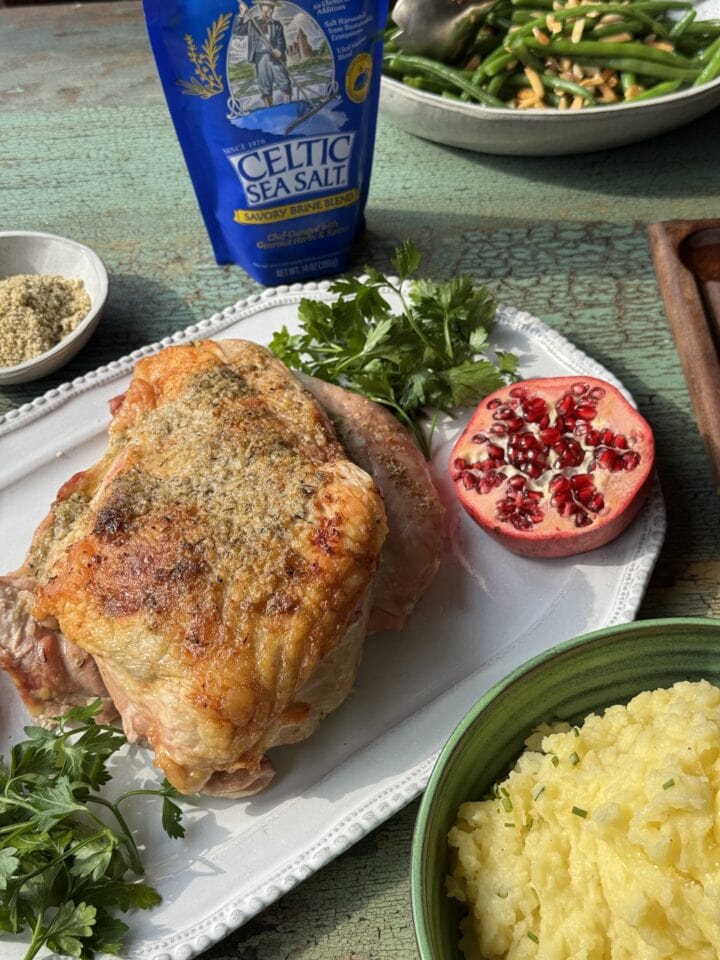
The Celtic Sea Salt® Savory Brine Blend is other secret here. It is 100% hand harvested salt that has 10 times the minerals of table salt. If you care about your food, you care about your salt. It goes directly into the butter and under the skin, and it goes on the outside too. You end up with something that’s seasoned all the way through, not just on the surface. For a recipe as simple as this one, getting high quality ingredients leads to high quality results. It is absolutely worth it to get this blend.
If you have leftovers, turkey soup or leftover turkey sandwiches are a must. If you are looking for more sides to serve with it, check out our holiday menu. And do not forget that you can make this recipe all year long! Turkey is great at the holidays, but this recipe is also great for meal prep. You can roast up the turkey breast and slice it for sandwiches. I love to slice it on my slicer.
Why This Recipe Works
Most boneless turkey breast recipes skip the under-skin step, which means the butter seasons the outside but never really gets into the meat. In this recipe, you spread the herbed butter mixture both under the skin and over it. Under the skin, it bastes the meat directly as it roasts, so it adds way more flavor. On top of the skin, it crisps and browns for that perfect texture.
The low oven temperature (325F) matters too. You roast it low and slow, start checking the temp around the one-hour mark, and pull it at 160F. Carryover cooking does the rest to make it safe to eat. Remember that turkey does not have a lot of fat, so you want to be really careful not to overcook it. Pulling it out at 160F (or even 155F if you are like me) will make sure you have a juicy final product.
The pan base of celery, carrots, onion, and white wine is also crucial. It serves two purposes: it keeps the oven environment moist while the turkey roasts, and it creates the foundation of the gravy.
Ingredients
- Celtic Sea Salt® Savory Brine Blend: The seasoning that goes into the butter and directly on the meat. It’s a blend of sea salt and herbs designed specifically for poultry, and it is absolutely worth it to take this turkey over the top.
- Butter: Soften your butter so it mixes easily with the brine blend and spreads under the skin without tearing it.
- Celery, carrots, and onion: Roughly cut and place the vegetables in the bottom of the roasting pan. These aromatics add some flavor to the steam and build the gravy base.
- Boneless turkey breast half: A 3- to 4-pound half breast, not a whole breast. Whole turkey breasts are usually around 8 pounds. This recipe is for one half.
- Dry white wine: Pour your wine into the bottom of the pan before roasting. It adds flavor to the drippings for gravy and keeps the environment moist.
- Chicken broth: Add the broth to the drippings after roasting to add volume for the gravy.
- Cornstarch: Whisk the cornstarch with heavy cream into a slurry that will thicken the gravy. Add more as needed to get the perfect consistency in your gravy.
- Heavy cream: Just a splash mixes with the cornstarch to make the gravy silky.
How to Make This Boneless Turkey Breast
Step One: Prep the Turkey
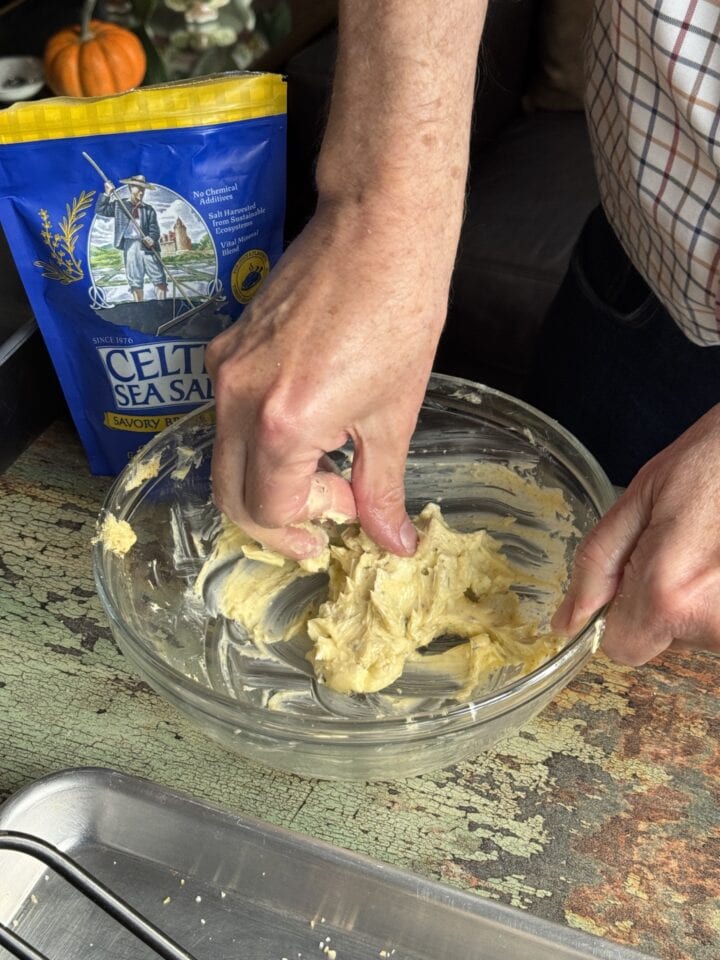
Preheat the oven to 325F. In a small bowl, combine the softened butter with 2 tablespoons of brine blend. Place the celery, carrots, and onion in the bottom of a roasting pan. Set a rack on top of them.
Pat the turkey breast dry and sprinkle 1 tablespoon of the brine blend over the top and bottom, rubbing it into the meat with your hands. Set the turkey on the rack, skin-side up.
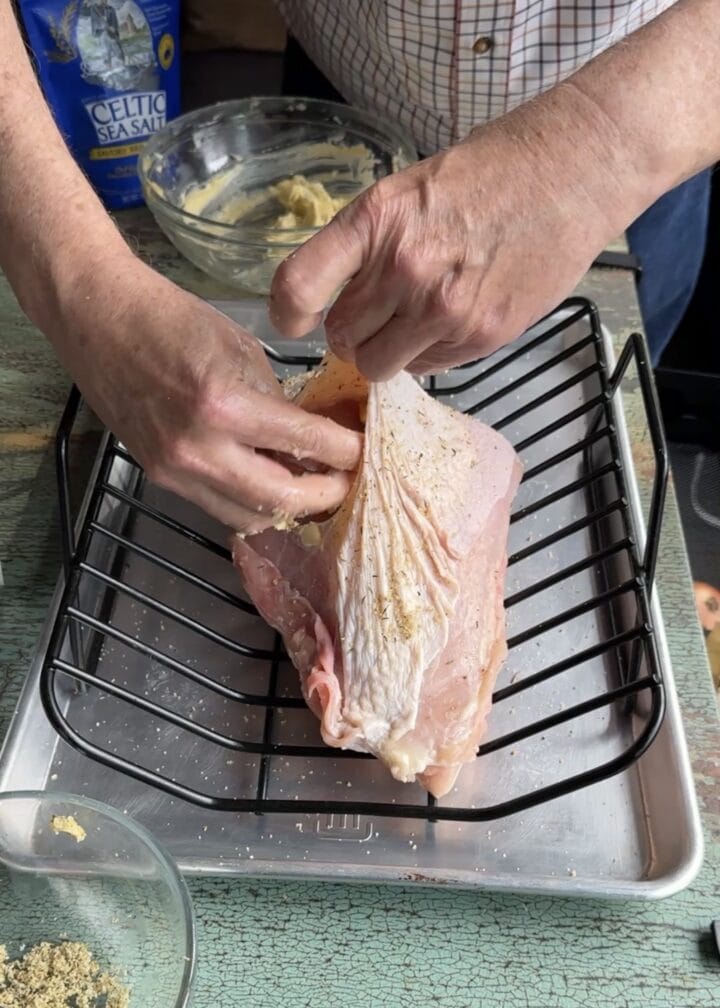
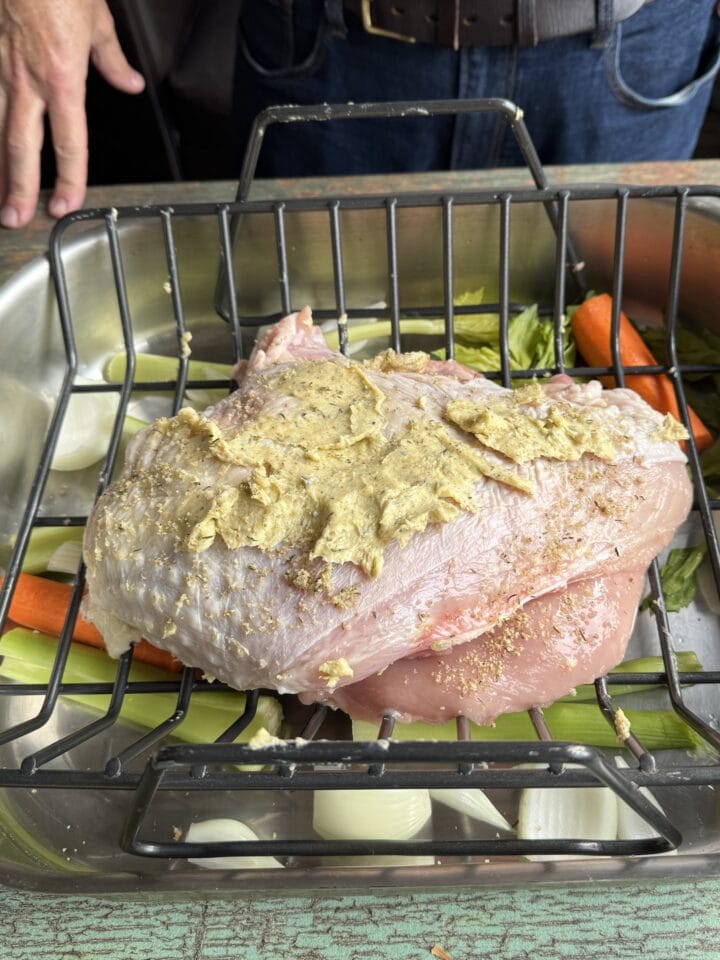
Gently work your fingers under the skin of the turkey breast to loosen it from the flesh and place half the butter mixture under the skin all over. Be patient with this step and make sure you’re not tearing the skin off. Rub the remaining butter mixture all over the skin of the breast.
Step Two: Roast the Turkey
Pour the wine into the bottom of the pan over the vegetables. Transfer the pan to the oven.
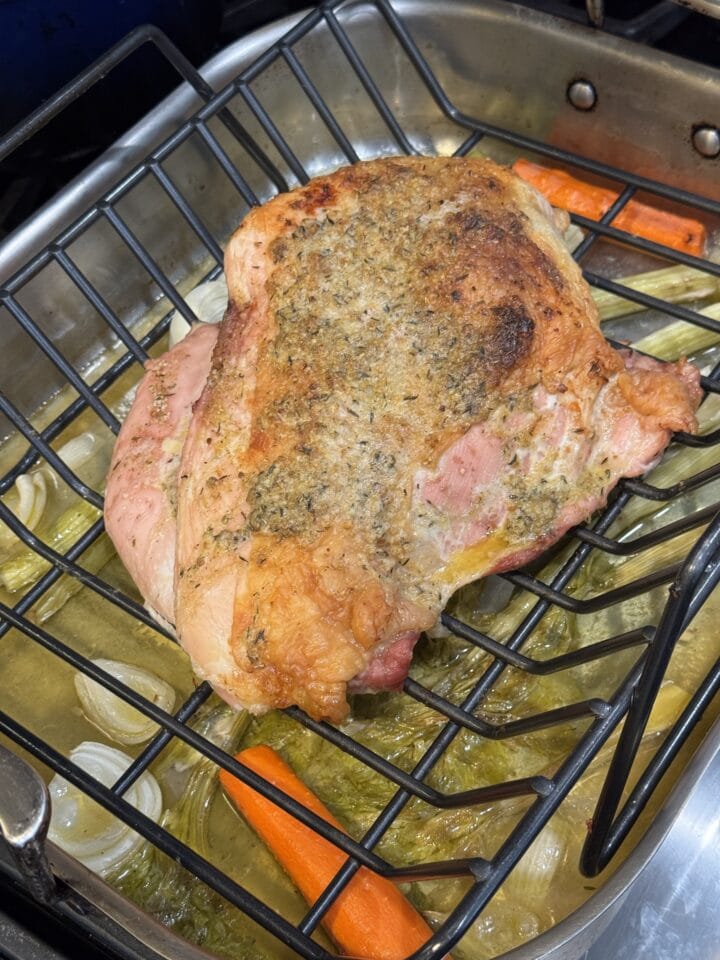
Roast the turkey breast until the internal temperature is 160F in the thickest part of your breast, about 1 ½ to 2 ½ hours total cooking time depending on the size of your breast. Start checking the temperature about 1 hour into cooking. Once your temperature gets to 120F, your breast will reach 160F pretty fast so keep an eye and measure every 10-15 minutes or so. It’s essential not to overcook the turkey!
Teri Tip: If you have a convection oven and want to use it for the last 15 minutes to boost the browning, that’s great. And if your breast is browning too fast, loosely tent it with aluminum foil and keep cooking until it reaches 160F
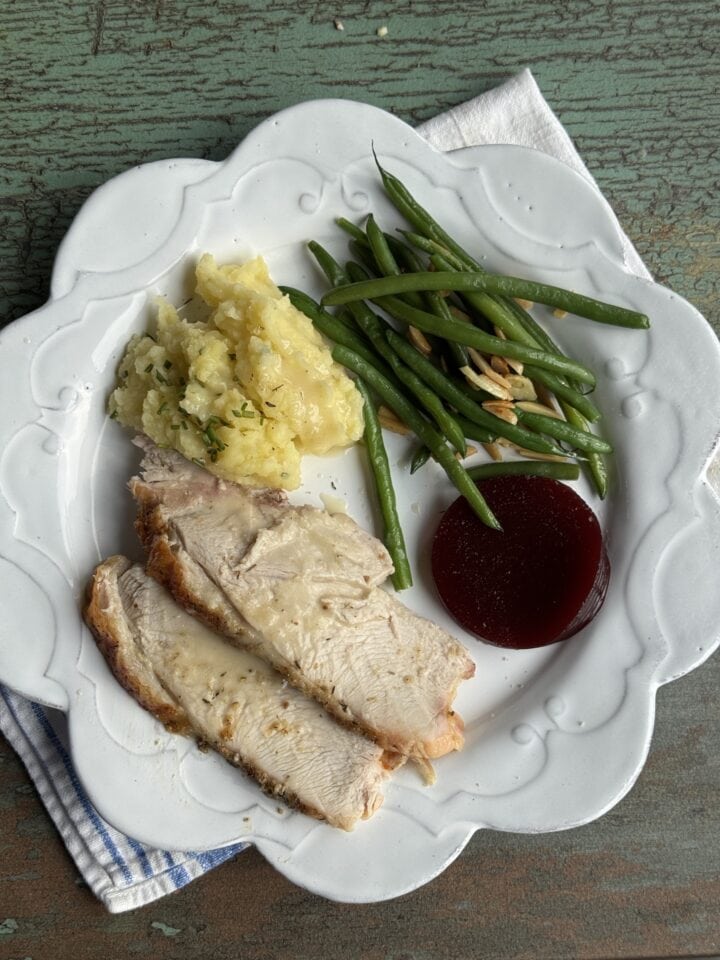
Step Three: Make the Gravy
Remove the pan from the oven and let the turkey rest. The internal temperature will continue to rise as it rests.
Collect the pan drippings and pour them into a small saucepan, discarding the celery, carrots, and onion pieces. Add the chicken broth and bring to a low simmer. In a small bowl, combine the cornstarch and heavy cream and whisk into a slurry. Add the slurry to the pan and whisk together. If the gravy is your desired thickness, let it cook a little but if you’d like it a little thicker add more slurry.
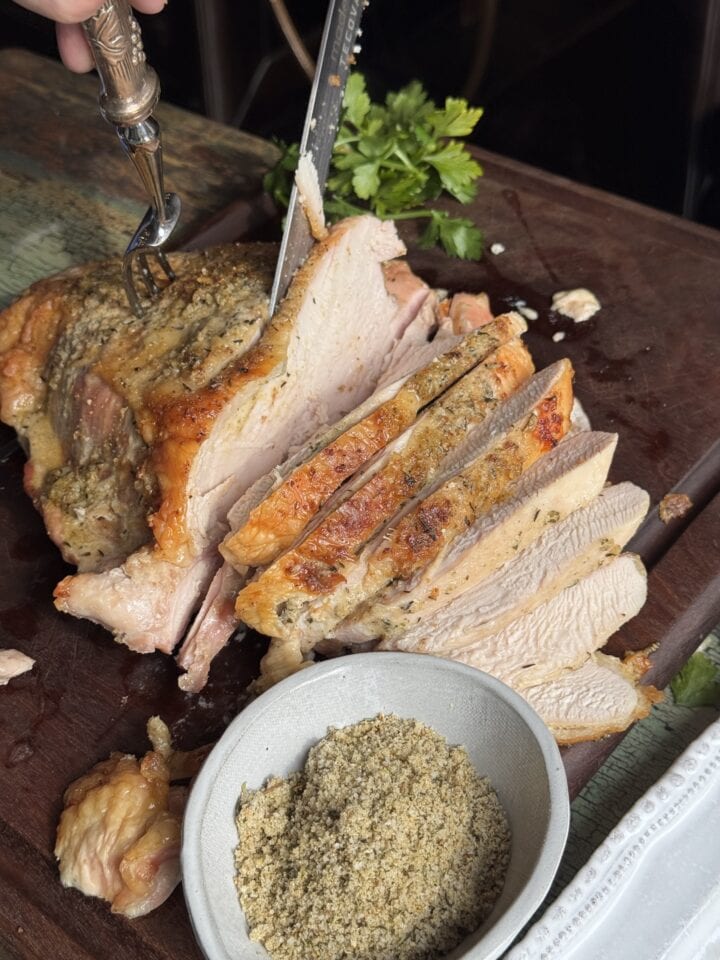
Slice the turkey breast and serve with the gravy and sides. See below for bone-in turkey breast instructions.
Bone In vs Boneless
This recipe calls for boneless, but if you have a bone-in turkey breast, you can follow the same method. Note that bone-in turkey breast will take a bit longer to cook, but to make sure it does not overcook, I still recommend checking beginning at the one hour mark.
Most grocery stores sell turkey breast already in halves, but if you are using a whole breast (about 8 pounds), it will take around three or more hours to cook. Use the same method and begin checking at the hour and a half mark.
If you happen to get a butterflied turkey breast, cook time will be faster! Because they are flatter than a regular turkey breast, they are thinner and cook a bit quicker. Start checking the temperature after 45 minutes of cooking.
Tips for The Best Boneless Turkey Breast
- Dry the turkey well. Pat it thoroughly before seasoning. This allows the skin to crisp up.
- Be patient under the skin. Work your fingers in slowly and create a pocket without tearing. Don’t rush it!
- Use a thermometer. Cooking time varies by size and oven, so it is crucial to have a thermometer. Check the thickest part of the breast for the temperature. If you are using bone-in, make sure it is in the meat and not touching the bone. Pull at 160F so the carryover cooking takes it to 165F.
- Don’t skip the rest. The breast needs at least 15–20 minutes to rest after it comes out. The internal temperature keeps climbing and the juices soak into the meat. If you slice too early, all of the juices run out of the meat.
- Tent with foil if browning too fast. If the skin is deeply golden before the meat is done, lay a piece of foil loosely over the top. It slows the browning while allowing the temperature of the turkey to keep rising.
Recipe FAQs
Pull it from the oven when it reaches 160F in the thickest part of the breast. I personally do this at 155F, but you absolutely want to pull it out by 160F. Carryover cooking will bring it up to temp while it rests. Going higher than that dries the meat out.
A 3-4 pound boneless breast can take anywhere from 1.5 to 2.5 hours. Every oven is different. Start checking the internal temperature at the one-hour mark so you can see how it is cooking. Check every 15 minutes.
Butter under the skin, a low oven temperature (325F), wine in the pan, and a thermometer to pull it at the right time all make your turkey perfectly juicy. Overcooking is the main reason turkey breast dries out, so watch it closely!
This recipe uses a savory brine blend in the butter and directly on the meat, which seasons the turkey deeply without a wet brine.
Uncovered, so the skin can brown. If the skin browns too fast before the meat is done, tent it loosely with foil to slow things down.
A whole turkey breast is typically around 8 pounds and includes both sides. A half breast is one side, usually 3 to 4 pounds, and is what this recipe calls for. It’s what you’ll find at most grocery stores labeled “boneless turkey breast.”
Yes. A similarly sized bone-in breast will take a little longer than a boneless, but I still recommend you begin checking the temperature after one hour of cooking. As with the boneless, pull it from the oven at 160F.
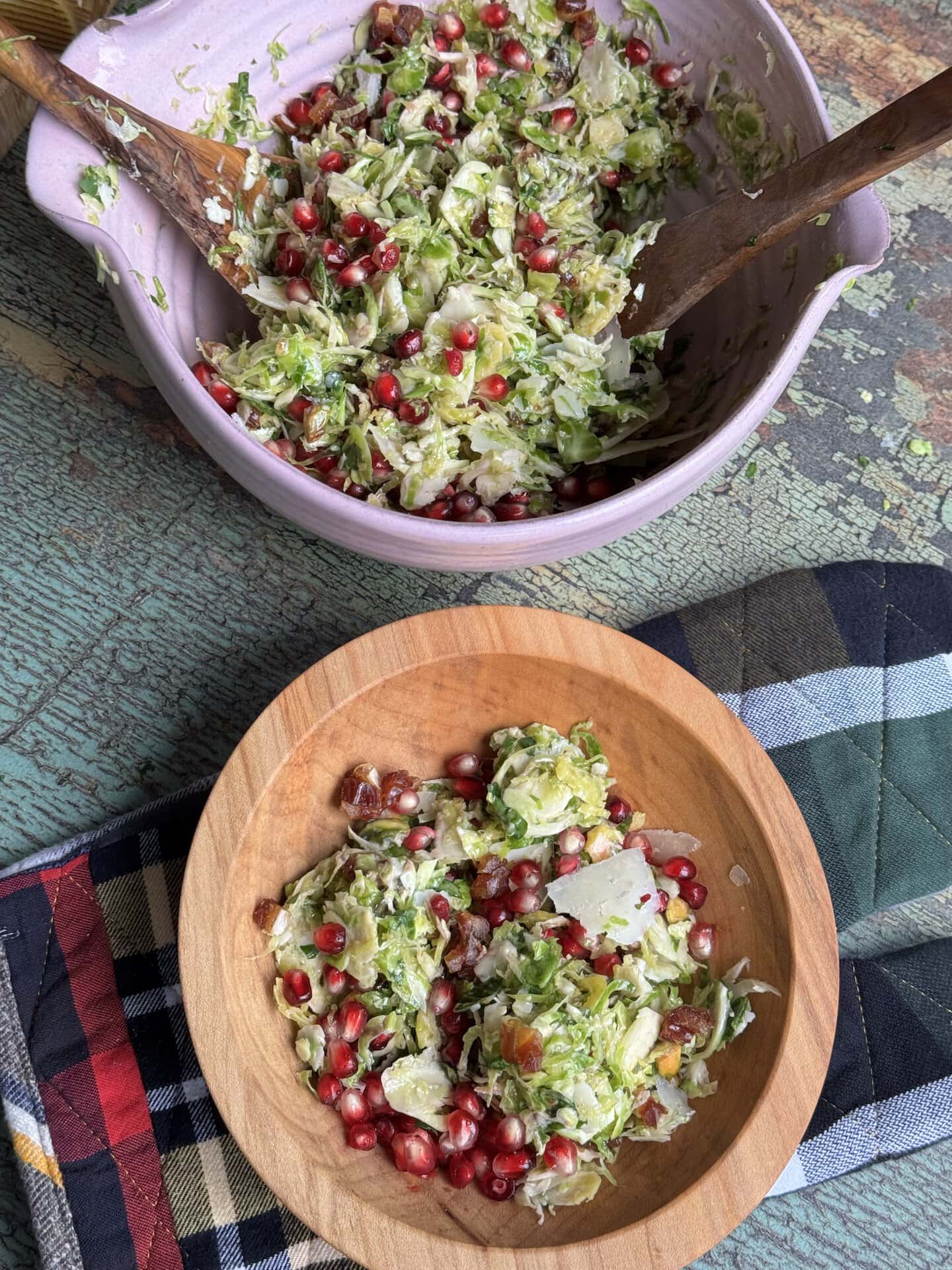
Holiday Sides to Serve with Your Turkey Breast



If you make this Boneless Turkey Breast Recipe, be sure to review it below and let me know what you think! If you’re looking for more inspiration, subscribe to my Substack, and follow along on Pinterest, Instagram, and TikTok to join in all the fun!
Boneless Turkey Breast (Oven Roasted)
Ingredients
- 3 tablespoons Celtic Sea Salt® Savory Brine Blend* divided
- 8 tablespoons butter softened
- 4 celery stalks trimmed and cut into large pieces
- 2 large carrots peeled and cut into large pieces
- 1 large onion cut into quarters
- 1 3- to 4- pound boneless turkey breast half*
- 1 ½ cups dry white wine
- 1-2 cups chicken broth
- 2 tablespoons cornstarch or more
- Splash of heavy cream or more
Instructions
- Preheat the oven to 325F.
- In a small bowl, combine the softened butter with 2 tablespoons of brine blend.
- Place the celery, carrots, and onion in the bottom of a roasting pan. Set a rack on top of them.
- Pat the turkey breast dry and sprinkle 1 tablespoon of the brine blend over the top and bottom, rubbing it into the meat with your hands. Set the turkey on the rack, skin-side up.
- Gently work your fingers under the skin of the turkey breast to loosen it from the flesh and place half the butter mixture under the skin all over. Be patient with this step and make sure you’re not tearing the skin off. Rub the remaining butter mixture all over the skin of the breast.
- Pour the wine into the bottom of the pan over the vegetables. Transfer the pan to the oven.
- Roast the turkey breast until the internal temperature is 160F in the thickest part of your breast, about 1 ½ to 2 ½ hours total cooking time depending on the size of your breast. Start checking the temperature about 1 hour into cooking. Once your temperature gets to 120F, your breast will reach 160F pretty fast so keep an eye and measure every 10-15 minutes or so. It’s essential not to overcook the turkey!Teri Tip: If you have a convection oven and want to use it for the last 15 minutes to boost the browning, that’s great. And if your breast is browning too fast, loosely tent it with aluminum foil and keep cooking until it reaches 160F
- Remove the pan from the oven and let the turkey rest. The internal temperature will continue to rise as it rests.
- Collect the pan drippings and pour them into a small saucepan, discarding the celery, carrots, and onion pieces. Add the chicken broth and bring to a low simmer.
- In a small bowl, combine the cornstarch and heavy cream and whisk into a slurry. Add the slurry to the pan and whisk together. If the gravy is your desired thickness, let it cook a little but if you’d like it a little thicker add more slurry.
- Slice the turkey breast and serve with the gravy and sides.