

How to Reverse Sear a Steak (Oven and Grill Methods)
Learning how to reverse sear a steak is one of the most valuable things you can do as a home cook. Once you try it, you will never go back to the traditional method. Cook low and slow in the oven or on the indirect heat of the grill, then finish with a sear and a butter baste. It is perfection, every single time.
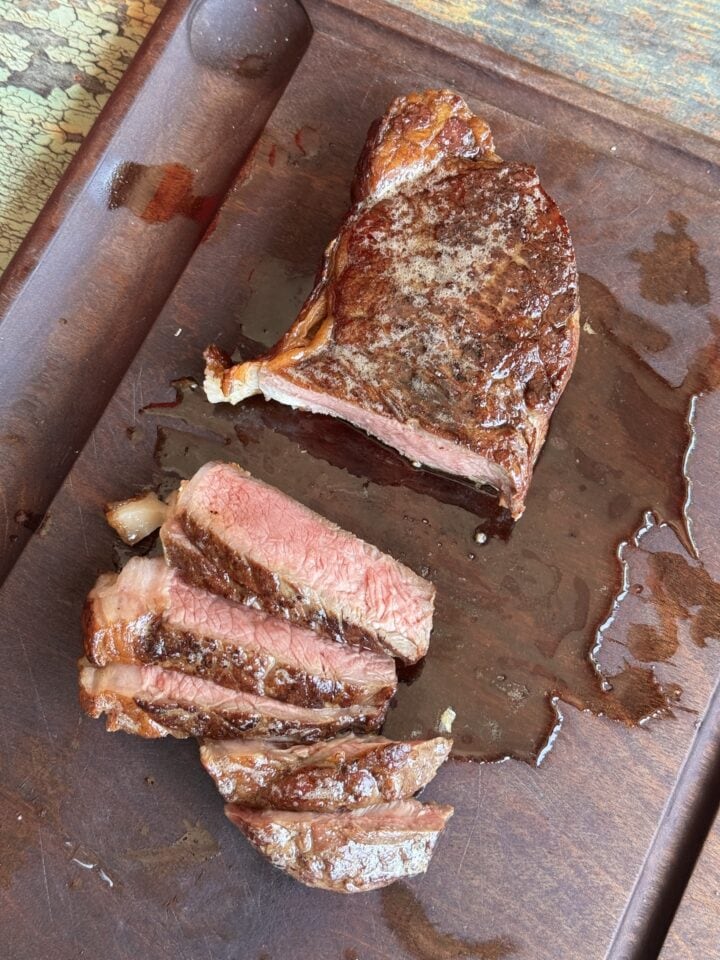
A Note from Teri on How to Reverse Sear a Steak
If you know me, you know how much I love a steak. I’ve perfected cooking methods over the years, and recently discovered the reverse sear method. It is a method that takes a little patience and a touch of finesse, but once you understand how it works, you’ll never want to go back to another method.
You start low and slow, either in a 225F oven or on the indirect heat side of a grill. Bring the steak up to temperature gradually. Finish it with a sear in a hot cast-iron pan or direct heat of the grill, with butter. The result is a steak that is evenly cooked with the perfect crust.
If you have the time, salting the steak overnight and letting it dry-brine uncovered in the refrigerator makes all the difference. You’ll at least want to do this for a minimum of one hour. It is what gives you that extraordinary crust and perfectly juicy steak.
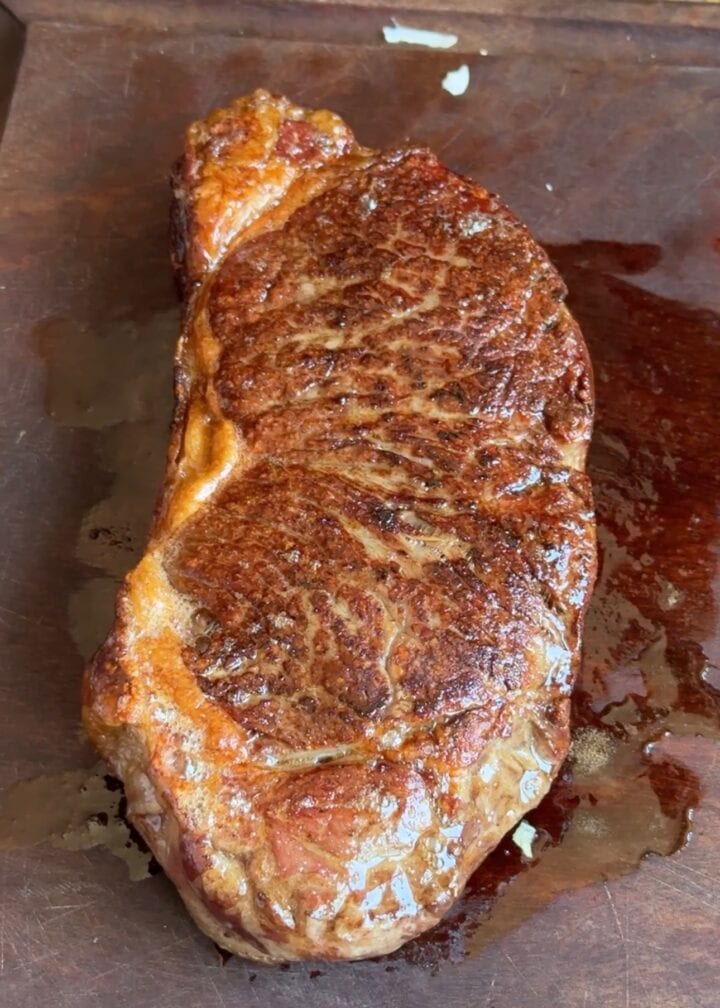
What Is the Reverse Sear Method?
Typical steak starts with a sear over high heat, then finishes the steak in the oven or covered pan to bring the interior to temperature. The reverse sear does that in the exact opposite order.
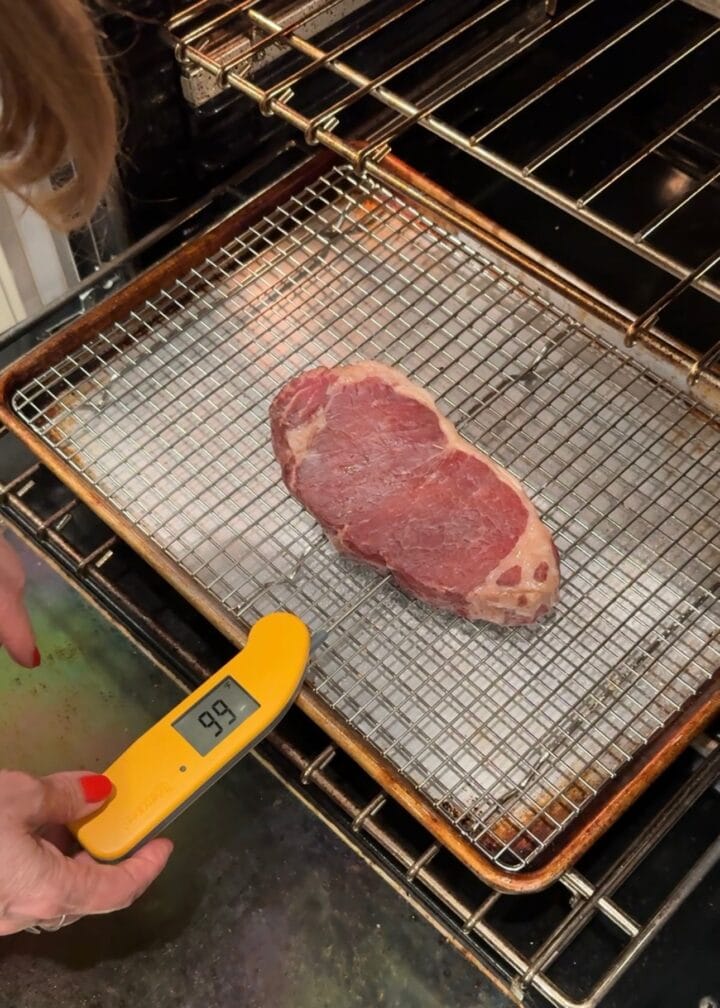
For oven cooking, you start the steak in a very low heat oven (225F) until the interior reaches 95–100F. Then, you transfer it into a very hot pan for a quick sear of 30 seconds per side. Rest for 20 minutes, slice, and serve.
For the grill, you follow the same instructions, but use indirect heat to reach the initial 100F, then transfer to direct heat for the final sear.
Because the meat comes to temperature slowly and evenly, there is no gray overcooked band around the outside of the steak that you might find in a traditional cook. The inside is cooked evenly, and the exterior gets the perfect caramelized crust.
Why Reverse Sear Works Better Than Traditional Searing
When you sear a cold steak over high heat, the outside of the meat cooks much faster than the inside. By the time the center reaches your target temperature, the outer layers are often overcooked.
The reverse sear solves this completely. Because the steak comes up to temperature gradually in a low heat oven, the inside is already at a perfectly even temperature before it ever touches the hot pan. The sear then only needs to create the crust, rather than cook the whole steak.
The other important factor is salting the steak well in advance. Salting the steak and leaving it uncovered on a rack in the refrigerator overnight draws out moisture, which then gets reabsorbed into the meat along with the salt, seasoning it deeply. The surface of the steak also dries out significantly, which means when it hits the hot pan, it sears immediately rather than steaming for a fabulous crust.
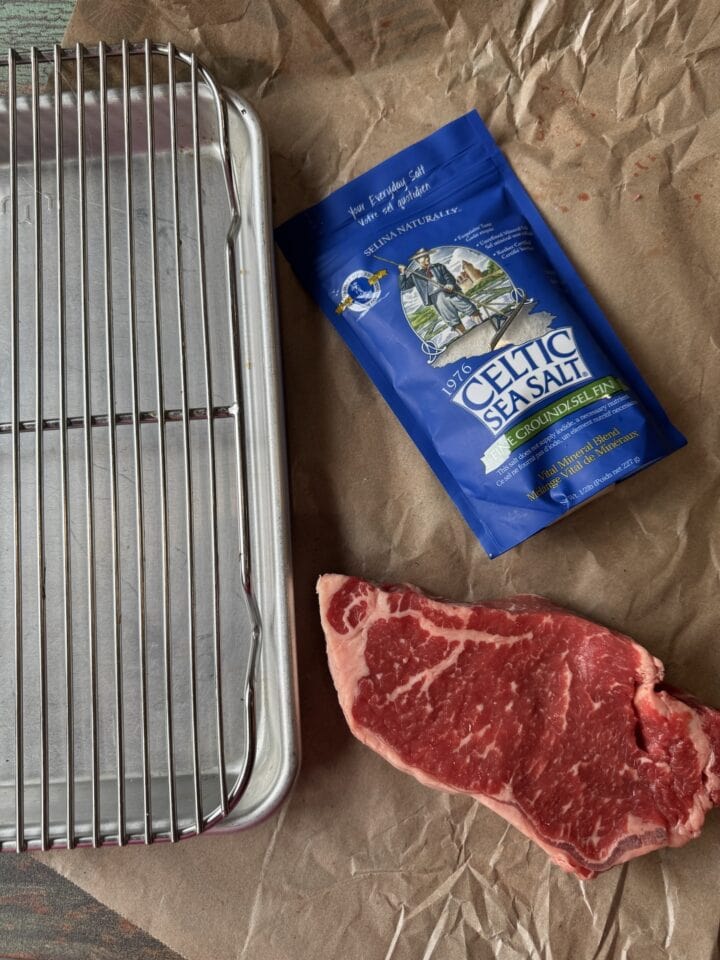
Ingredients and Equipment
- NY strip steak, about 1½ inches thick – the reverse sear is best with thick-cut steaks. NY Strip or Ribeye are great as long as they are thick cut
- Celtic Sea Salt® – use this sea salt for the brine and the final seasoning. Celtic Sea Salt®has a mineral blend that makes a genuine difference in the crust and the flavor of the steak
- High smoke point oil – avocado oil or light olive oil. You need an oil that can withstand the heat in the hot pan. Regular extra virgin olive oil will smoke too much
- Butter – use a few tablespoons for the butter baste. The melted butter adds the greatest flavor to the crust
- Fresh rosemary or thyme – one or two sprigs get added to the butter baste. They release their oils instantly and infuse so much flavor
- Garlic, crushed – use one large clove, added to the butter baste alongside the herbs. Use crushed rather than minced to avoid burning the garlic.
- A wire rack set in a sheet tray – you’ll use this for the overnight dry-brine and the oven cook. Using the wire rack allows air to circulate all around the steak, so that the steak dries completely
- A cast-iron pan – Cast iron holds heat better than any other pan material, which means it maintains the high temperature needed for getting a golden brown crust
- An instant-read meat thermometer – You need a thermometer to get the perfectly cooked steak. The entire method depends on knowing exactly when the steak hits certain temperature.
How to Reverse Sear a Steak in the Oven
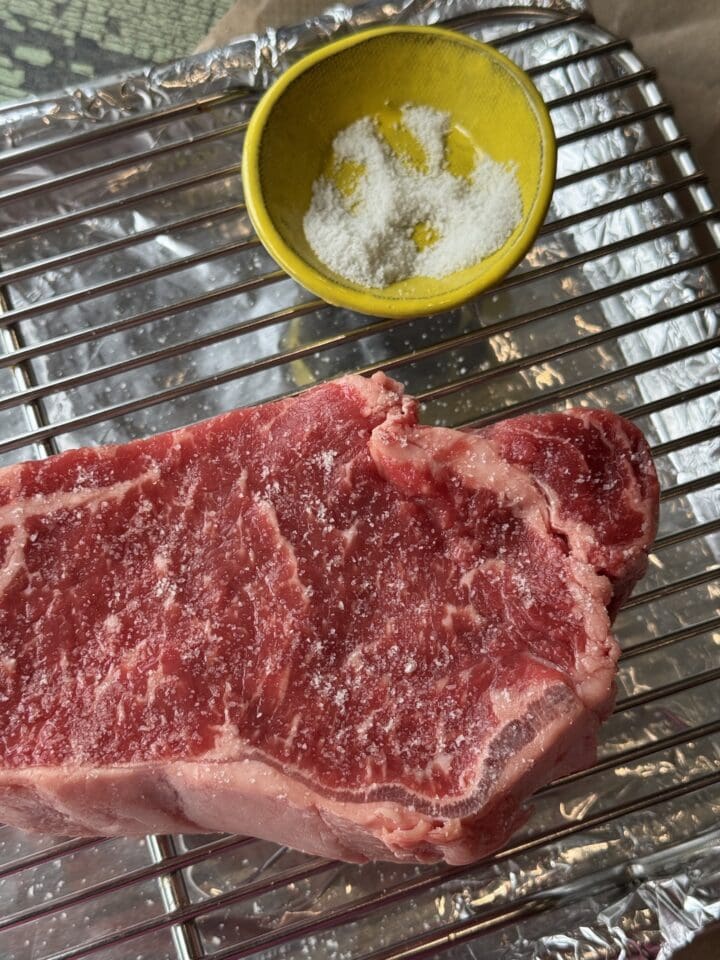
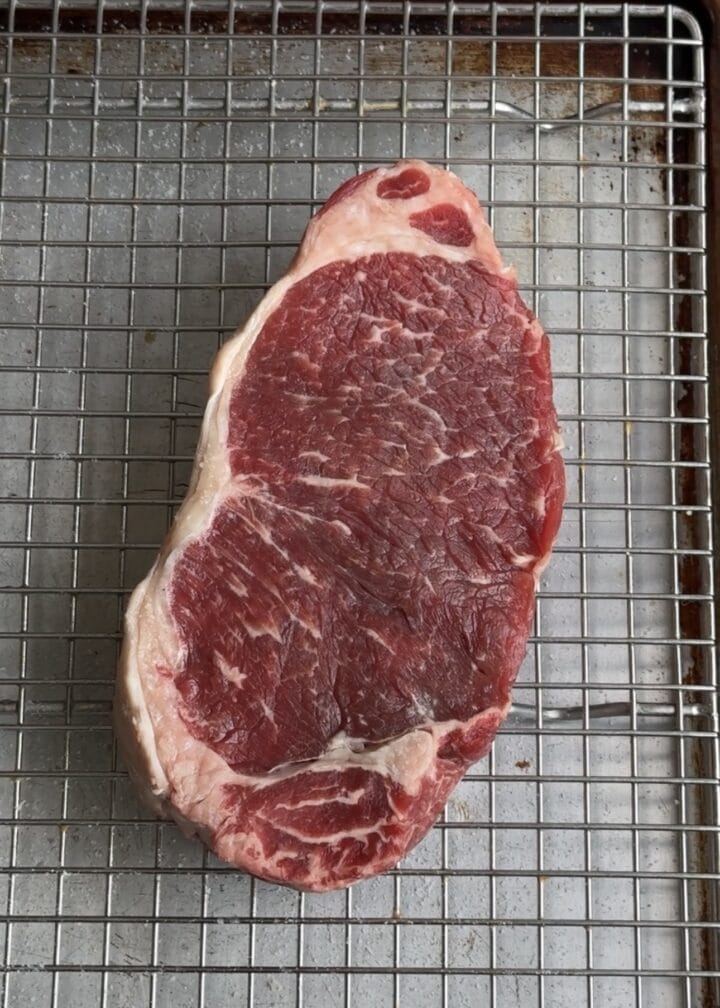
Step One: Dry-Brine the Steak Overnight
Place a wire rack in a sheet tray. Set the steak on the rack and season all over with salt. Place in the refrigerator overnight. If you are short on time, salt the steak then place in the fridge for about an hour.
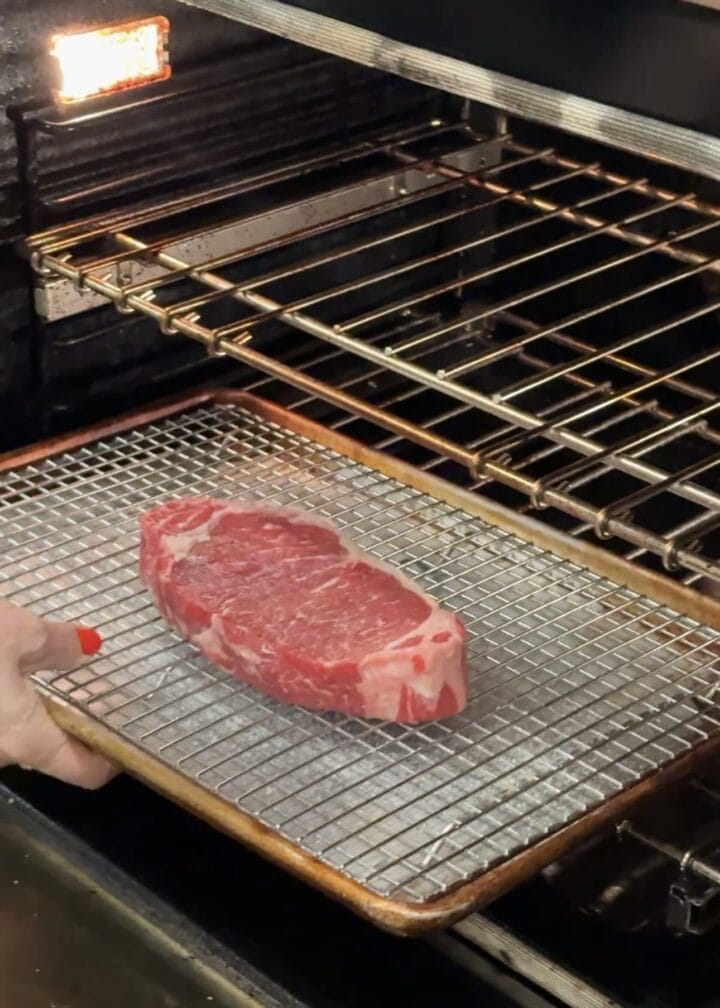
Step Two: Cook Low and Slow
Preheat the oven to 225F. Place the baking sheet with the steak directly from the fridge into the oven and cook until the meat reaches an internal temperature of 95-100F for medium-rare (the meat will continue cooking as it rests and as it’s seared), about 45 minutes. .
After the steak has been in the oven for 40 or so minutes, place a cast-iron pan over high heat. You want to get this pan screaming hot.
As the pan is heating, do an initial temperature check to avoid overcooking. To check the temperature, remove the steak from the oven and insert a meat thermometer into the middle of the steak from the side. Wait 3-5 seconds to get a reading.
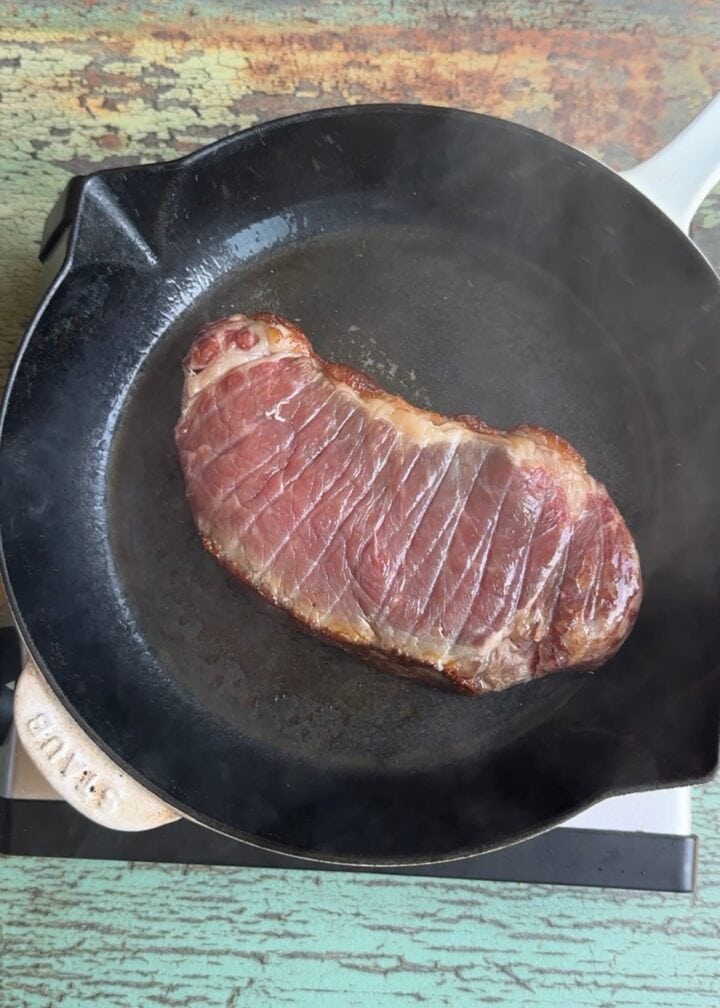
Step Three: Sear and Butter Baste
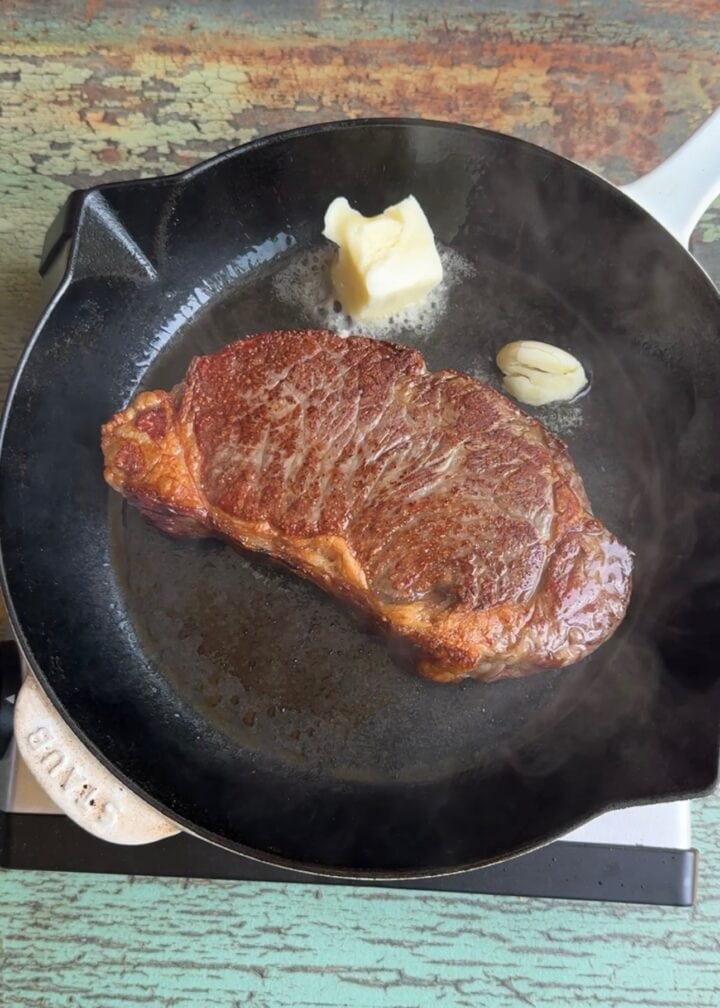
When the steak reaches 95-100F, add the oil to the hot pan. Using tongs, sear the the fat cap on the sides of the steak briefly then place the steak flat into the hot pan and sear 30 seconds. Flip the steak, add the butter to the pan along with the herbs and garlic clove, and cook the steak for another 30 seconds, basting the meat with the melted butter by tilting the pan slightly and continuously spooning the melted butter over the top surface of the meat. For medium-rare, pull the steak from the heat when it’s about 10°F below your target temperature (around 120°F). During a 20-minute rest, carryover cooking will bring it up to 130–135°F.
Let the steak rest for about 20 minutes before slicing.
How to Reverse Sear a Steak on the Grill
Set up a grill with direct and indirect zones, heating one side to high and leaving the other off. Melt the butter. Once melted, add garlic clove and rosemary sprigs. Set aside.
Place the steak onto the indirect heat side, close the lid and cook for 10 minutes before taking an initial temperature check. Cooking time will vary depending on the steak and heat of your grill so check the temperature often to avoid overcooking.
Once the steak reaches 95-100F, brush it with the melted butter on both sides then place directly on the hot side of the grill and sear for 30 seconds on each side. Be careful of flames that may flare from when the buttered side hits the fire!
After the steak has been seared on both sides, remove to a platter, brush with additional butter and let rest. After 20 minutes, slice and serve.
How to Butter Baste a Steak
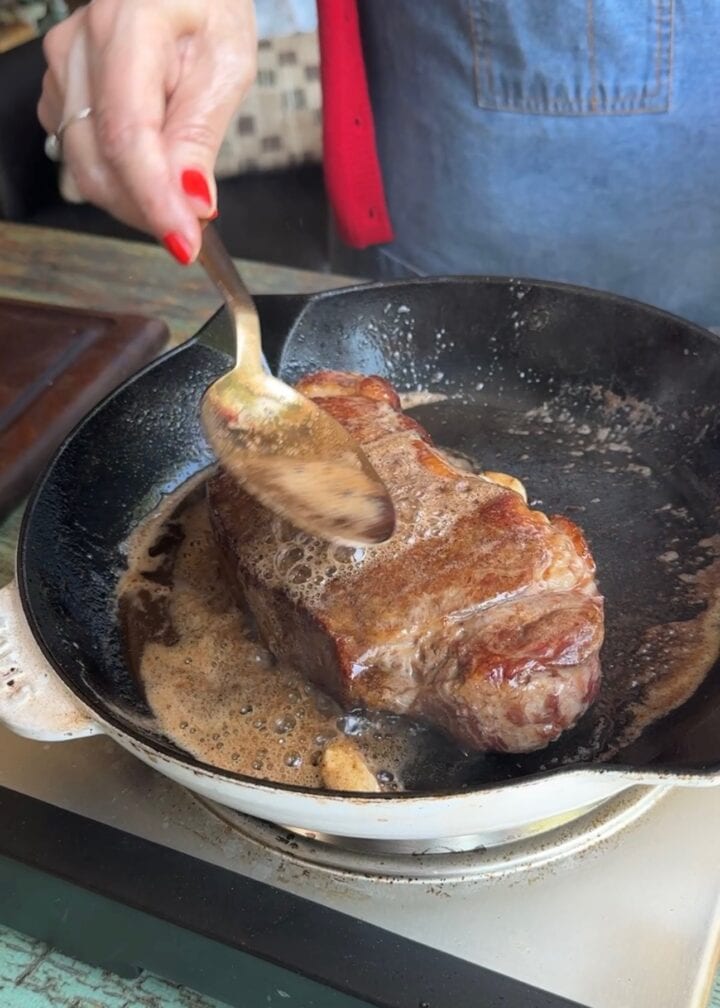
The moment you flip the steak after the first 30-second sear, add the butter, herbs, and crushed garlic directly to the pan. The butter will melt almost instantly. As soon as it does, tilt the pan slightly toward you to allow the butter to pool. Use a large spoon to scoop and pour the butter continuously over the steak.
The hot butter adds richness and flavor to the crust, and the hot fat is helping the browning of the crust as the bottom sears. It is a simple step, but a crucial one to take your steak to the next level.
Steak Temperature Guide
Use this as your reference for reverse searing to any doneness level. Remember: remove the steak from the heat approximately 10F below your target. Carryover cooking during the 20-minute rest will bring it the rest of the way.
| Doneness | Remove from Heat Temp | Final Rested Temp |
|---|---|---|
| Rare | 115°F | 120–125°F |
| Medium-Rare | 120°F | 130–135°F |
| Medium | 130°F | 140–145°F |
| Medium-Well | 140°F | 150–155°F |
For the low oven stage, regardless of your target doneness, pull the steak from the oven at 95-100F and then adjust your sear time.
Teri’s Tips for the Perfect Reverse Sear Steak
- Salt overnight always – One hour is the minimum, but overnight is really the ideal. The dry-brine seasons the meat deeply and dries the surface for the best cook. And of course, use Celtic Sea Salt® for the best flavor
- Use a thick steak – The reverse sear is designed for steaks that are at least 1 to 1½ inches thick. Thinner steaks cook too quickly and won’t get the same results.
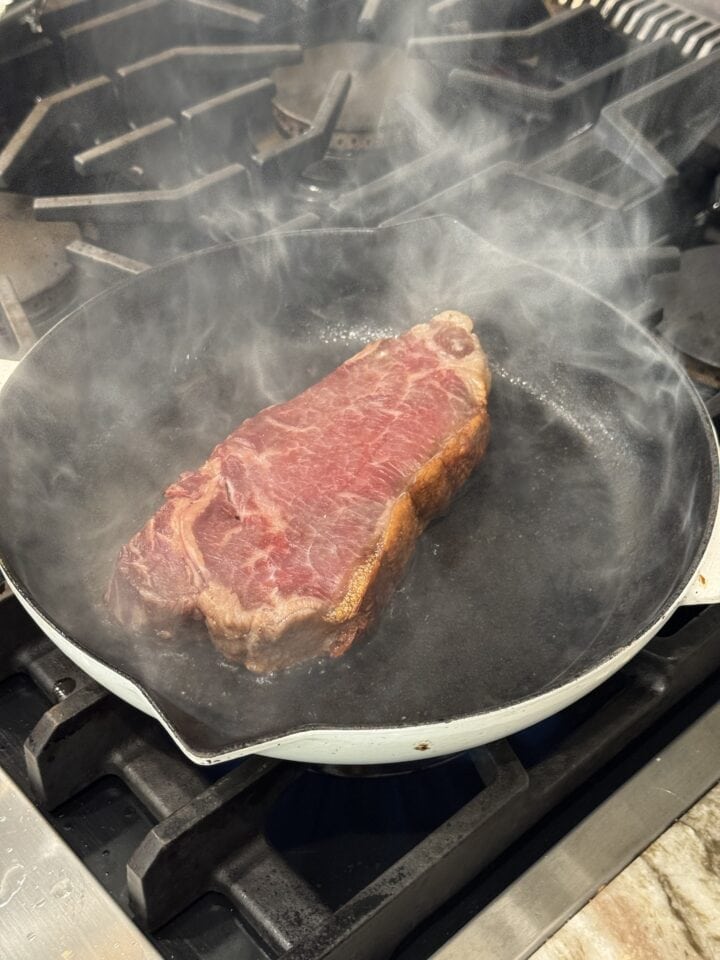
- Get the cast-iron genuinely hot – Give it at least 5–10 minutes over high heat before the steak goes in to get the temperature hot for a perfect sear.
- Use a thermometer, not a timer – Every steak is different, so the only way to know when to move it to the pan for a sear is to check the temperature. Insert from the side into the thickest part of the meat for the most accurate reading.
- Don’t skip the rest – Twenty minutes feels like a long time when you’ve just made something that smells incredible, but the rest is essential to finish cooking. If you cut into it too soon, you lose all the juices. The steak will still be warm after 20 minutes, and the results will be way better.
- Sear the fat cap – Searing the fat cap renders the fat so that it infuses flavor into your steak and makes the texture of the fat cap much more tender.
Reverse Sear FAQs
Thick-cut steaks with good marbling work best. NY strip and ribeye are the two most ideal choices. You want at least 1 to 1½ inches of thickness for the best results.
Overnight is strongly recommended, but if you’re short on time, one hour in the refrigerator will still make a difference. Be sure to avoid salting the steak and cooking it immediately, because the moisture that was drawn out by the salt hasn’t had time to be reabsorbed, and you’ll steam rather than sear the steak.
Cast iron is best because it holds and distributes heat better than any other pan. A stainless steel pan can work if needed. Do not use a non-stick pan, because the high temperatures required will damage the pan and the steak.
Try These Other Cooking Methods


If you make your own Reverse Sear Steak recipe, be sure to review it below and let me know what you think! If you’re looking for more inspiration, subscribe to my Substack, and follow along on Pinterest, Instagram, and TikTok to join in all the fun!
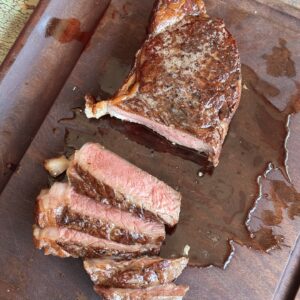
Reverse Sear Steak
Equipment
- 1 Wire Rack and Sheet Pan
- 1 Instant Read Meat Thermometer
Ingredients
- 1 NY strip steak about 1 ½ inches thick
- 3/4-1 tsp Celtic Sea Salt®
- 1-2 tablespoons oil with high-smoking point i.e., avocado, light olive oil
- 2 tablespoons butter
- 1-2 sprigs rosemary or thyme
- 1 large clove garlic crushed
Instructions
Oven Method
- Preheat the oven to 225F.
- Place the baking sheet with the steak directly from the fridge into the oven and cook until the meat reaches an internal temperature of 95-100F for medium-rare (the meat will continue cooking as it rests and as it’s seared), about 45 minutes. .
- After the steak has been in the oven for 40 or so minutes, place a cast-iron pan over high heat. You want to get this pan screaming hot.
- As the pan is heating, do an initial temperature check to avoid overcooking. To check the temperature, remove the steak from the oven and insert a meat thermometer into the middle of the steak from the side. Wait 3-5 seconds to get a reading.
- When the steak reaches 95-100F, add the oil to the hot pan. Using tongs, sear the the fat cap on the sides of the steak briefly then place the steak flat into the hot pan and sear 30 seconds. Flip the steak, add the butter to the pan along with the herbs and garlic clove, and cook the steak for another 30 seconds, basting the meat with the melted butter by tilting the pan slightly and continuously spooning the melted butter over the top surface of the meat. For medium-rare, pull the steak from the heat when it’s about 10°F below your target temperature (around 120°F). During a 20-minute rest, carryover cooking will bring it up to 130–135°F.
- Let the steak rest for about 20 minutes before slicing.
Grill Method
- Set up a grill with direct and indirect zones, heating one side to high and leaving the other off.
- Melt the butter. Once melted, add garlic clove and rosemary sprigs. Set aside.
- Place the steak onto the indirect heat side, close the lid and cook for 10 minutes before taking an initial temperature check. Cooking time will vary depending on the steak and heat of your grill so check the temperature often to avoid overcooking.
- Once the steak reaches 95-100F, brush it with the melted butter on both sides then place directly on the hot side of the grill and sear for 30 seconds on each side. Be careful of flames that may flare from when the buttered side hits the fire!
- After the steak has been seared on both sides, remove to a platter, brush with additional butter and let rest.
- After 20 minutes, slice and serve.
Notes
Steak Temperature Reference
| Doneness | Pull from Pan | Final After Rest |
|---|---|---|
| Rare | 115°F | 120–125°F |
| Medium-Rare | 120°F | 130–135°F |
| Medium | 130°F | 140–145°F |
| Medium-Well | 140°F | 150–155°F |
Sportzfy Apk free download new version v24.0 (2026) for Android and Smart TV. Stream Football, Cricket, and other sports in HD.
Thank you for this incredibly thorough guide! I’ve always been intimidated by reverse searing, but the step-by-step instructions, especially the temperature guide and the emphasis on the overnight dry-brine, make me feel confident to try it. The butter-basting tip is a game-changer.
Great post! I’ve struggled with getting an even cook on thick steaks, but this low-and-slow method sounds like a game-changer. While waiting for the oven to preheat, I even used a keyboard test to kill time—highly recommend trying the reverse sear if you haven’t yet.
The emphasis on gradual temperature control and dry-brining highlights why reverse searing delivers more consistent results than traditional methods. It would also be helpful to include target pull temperatures for different levels of doneness to improve repeatability. Check out sellwhere for more.
Wow, this reverse sear technique is a game changer! I tried it last weekend and the steak turned out perfectly tender. Thanks for breaking it down so clearly! I’m definitely bookmarking this post for future reference.
This recipe works! My husband does the grilling but I made it using Teri’s oven method and it was perfect! Delicious, thank you!
The 95–100°F pull temperature before the final sear and rest is the detail that makes this method much easier to follow. For a two-inch ribeye, would you keep the same pull temperature and simply extend the low oven stage, or stop a little earlier to allow for more carryover during the sear?
I really appreciate this detailed breakdown of the reverse sear method. It is my favorite way to cook a thick ribeye because it ensures such an even temperature throughout. While waiting for the oven to finish, I often enjoy a quick ?? to pass the time. Great tips on the dry-brining!
Nice Blog Very Helpful I Like This!
Explore an iconic, highly acclaimed active incremental title built around simple controls, vibrant low poly aesthetics, and deep skill trees where bills must be paid completely captivates everyone who starts a run, so open the app right now, share your favorite hammer builds, and play together with arcade fans from around the world.
Thank you for this detailed guide on reverse searing! The method truly elevates the steak experience, reflecting how careful preparation can transform simple meals into culinary delights.