

Bacon in Oven: The Only Method You’ll Ever Need
Cooking bacon in the oven is a revelation. Once you try it, you will never go back to the stovetop. No grease splatter across your cooktop, no hovering over a hot pan, and no smoke alarm. Just perfectly golden, evenly cooked bacon on a sheet pan, cooked in a 400F oven, and pulled out when it hits exactly your preferred level of crispiness. It is hands off, mess free, and the most consistently perfect bacon.

Why Bacon in the Oven is Better Than Stovetop
There are five reasons to cook your bacon in the oven instead of the stovetop, and you’ll never want to go back.
- No grease splatter – Stovetop bacon pops as the fat renders in a hot pan, coating your cooktop, your backsplash, and sometimes your arm in hot bacon grease. Oven bacon renders slowly in the oven, so there is no splatter, no mess, and no burns.
- Even cooking – A skillet cooks bacon from the bottom only, which means the side touching the pan cooks faster than the top, the ends curl from uneven heat, and you have to flip constantly. The oven surrounds the bacon with heat from all directions so it cooks every part of each strip evenly without any intervention.
- The whole package at once – A large skillet only fits a few strips of bacon without overlapping. A sheet pan often fits an entire package in one flat layer, so you don’t have to worry about cooking in batches.
- Hands-off cooking – You put the bacon in the oven and walk away. Set a timer to check on it, and you are all set. This oven bacon is perfect to make while you are simultaneously making everything else for a big breakfast.
- Flat, beautiful strips – Stovetop bacon curls as the fat contracts from the high, direct heat. Oven bacon lays flat, which means it sits perfectly on a sandwich and chops or crumbles easily for salads, pasta, or anything else you are making.
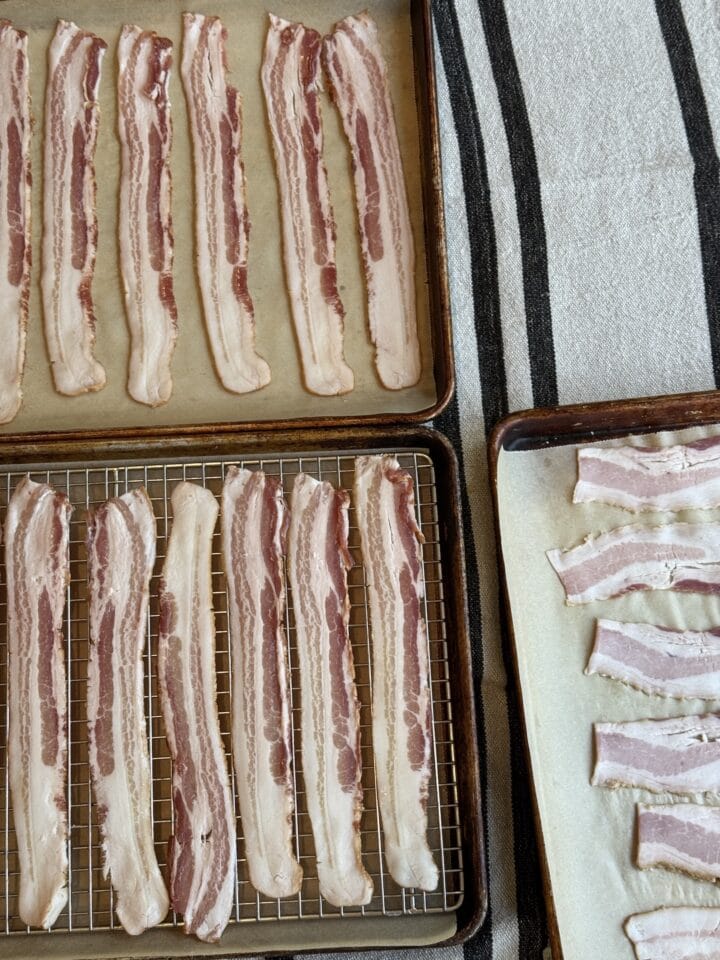
Parchment Paper vs. Wire Rack: Which Is Better?
This is one of the most common questions about oven bacon, and the answer really depends on how you like your bacon.
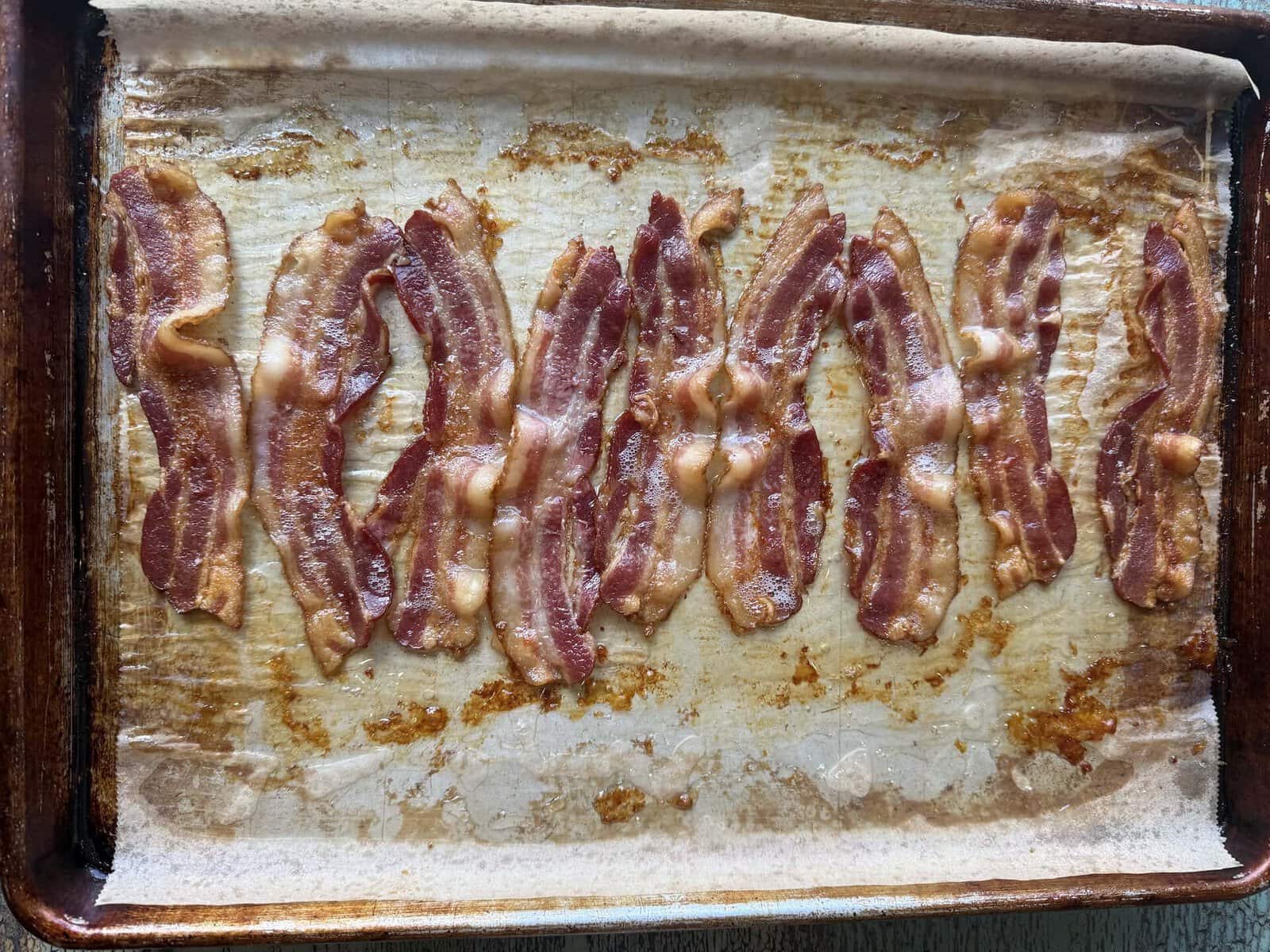
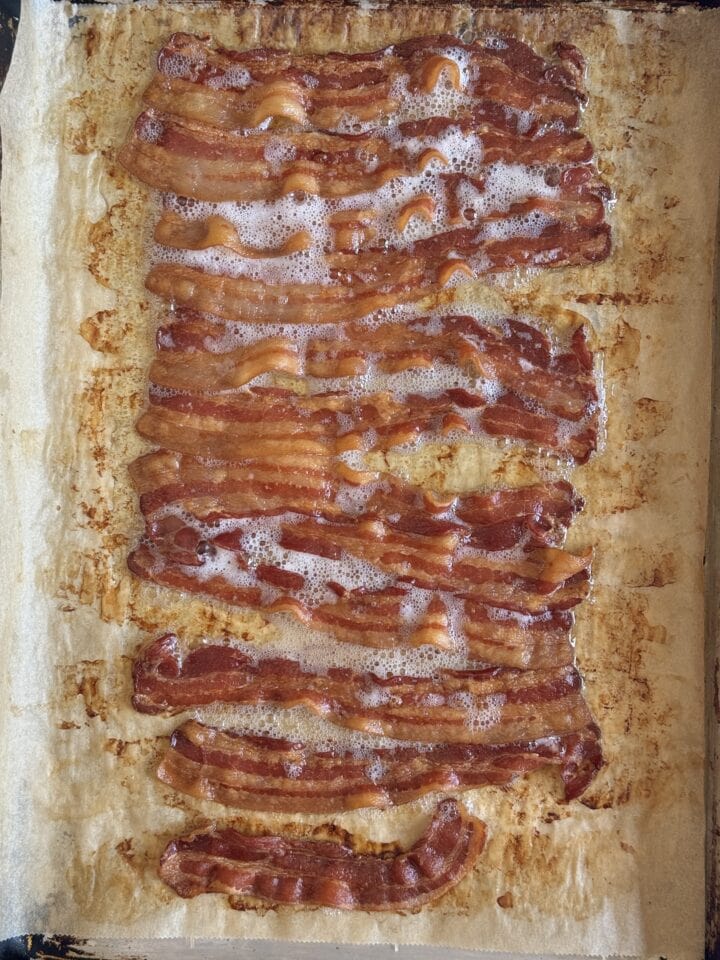
Parchment paper on a sheet pan is the simpler, more accessible method and what I prefer. The bacon renders in its own fat as it cooks, which bastes the strips and results in bacon that is deeply flavorful, a little chewier in texture, and absolutely delicious. The cleanup is effortless. Lift the parchment, pour off the fat if you want to save it, and discard. Regular bacon on parchment takes 15-20 minutes. Thicker, wider bacon on parchment takes 20-25 minutes.
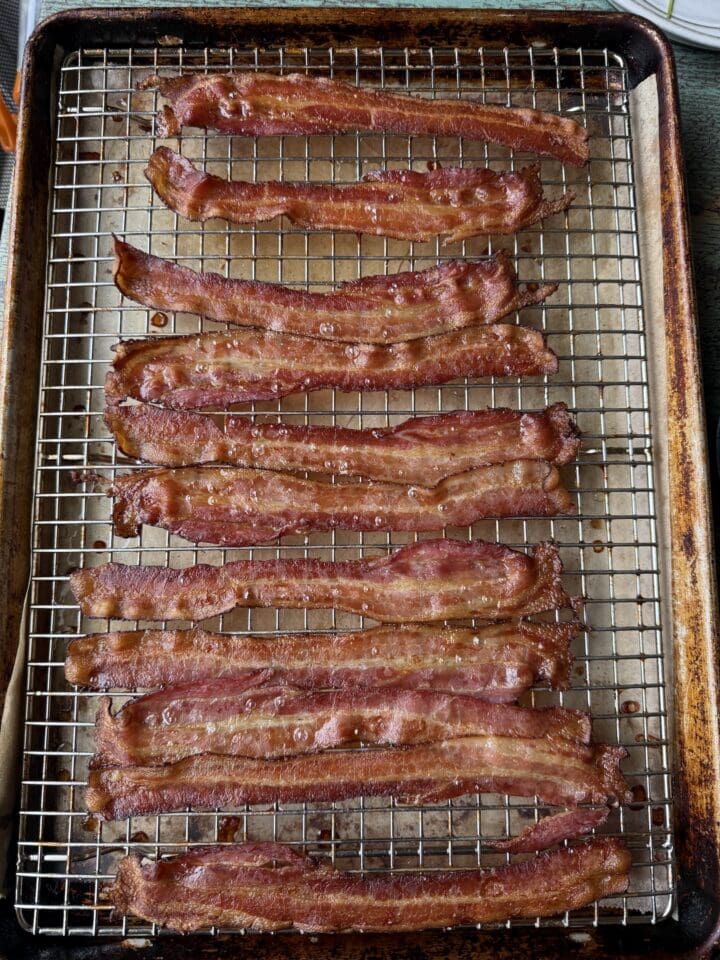
Wire rack set in a sheet pan lifts the bacon above the fat so the heat circulates beneath the strips as well as above them. This make slightly crispier bacon because the fat drips away rather than pooling around it. If you want the crunchiest, driest bacon possible, the rack is best. Regular bacon on a rack takes 20–25 minutes.
For most purposes, parchment is the move. For maximum crispiness or if you are specifically making bacon for crumbling over a salad or topping a dish, the rack is a good option.
Regular Bacon vs. Thick-Cut Bacon in the Oven
Both regular and thick-cut bacon work beautifully in the oven. They just need different timing and produce slightly different results.
Regular-cut bacon (the standard package you find at the grocery store) renders and crisps faster in the oven. On parchment, it takes 15–20 minutes; on a rack, 20–25 minutes for slightly crispier results. It is the best choice if you like your bacon fully crispy.
Thick-cut bacon takes longer, about 20–25 minutes on parchment, but the result is extraordinary. The fat has more time to render slowly, which makes it deeply flavorful. Thick-cut bacon in the oven is the bacon for a serious sandwich, a steak topping, or any situation where the bacon is the star of the show.
The key with either option is to start checking at the 15-minute mark, because oven temperatures vary significantly. Check it and pull it when it looks exactly the way you want it.
What to Do with the Bacon Fat
The fat rendered from your oven bacon is one of the most flavorful cooking fats in existence. It is liquid gold. Here is what you can do with it:
- Cook your eggs in it immediately – Pour or spoon the bacon fat directly from the sheet pan into a skillet, heat it over medium, and cook your eggs in it. Fried eggs cooked in bacon fat have a crispy edge and a bit of added flavor that is delicious
- Save it for later – Let the fat cool slightly, then strain it through a fine mesh strainer into a small glass jar or container. Stored in the refrigerator, bacon fat keeps for up to a month and can be used in place of butter or oil when sautéing vegetables, making gravy, roasting potatoes, seasoning cast iron, or anywhere you want an extra burst of flavor.
How to Cook Bacon in the Oven
Step One: Combine the Ingredients
Preheat the oven to 400°F. Line a sheet pan with parchment paper. If you are using the rack method, set a wire rack inside the sheet pan.
Step Two: Arrange the Bacon
Lay the bacon strips out in a single layer on the parchment or rack. The strips can be touching or very close together. They will shrink as the fat renders and more space will appear between them as they cook. Do not overlap strips, which prevents even cooking and causes too much steam.
Step Three: Cook the Bacon
Place the sheet pan in the preheated oven. Set a timer for 15 minutes. When the timer goes off, check the bacon to see how your oven is cooking it. From here, check every 2-3 minutes until the bacon reaches your preferred doneness. Keep in mind that the bacon will crisp up a little bit as it rests.
Regular bacon on parchment: 15-20 minutes total. Regular bacon on a rack: 20-25 minutes total. Thick-cut bacon on parchment: 20-25 minutes total.
Step Four: Remove and Rest
Transfer the bacon to a paper towel–lined plate to absorb any excess fat. Let it rest for 2-3 minutes so it crisps up slightly as it cools. Do not discard the fat in the pan. Pour it off into a jar for later or use it immediately to cook eggs.
Oven Bacon Time and Temperature Guide
| Bacon Type | Method | Temperature | Time | Texture |
| Regular Cut | Parchment | 400F | 15-20 min | Chewy to crispy |
| Regular Cut | Wire Rack | 400F | 20-25 min | Crispier |
| Thick Cut | Parchment | 400F | 20-25 min | Chewy to crispy |
| Thick Cut | Wire Rack | 400F | 22-28 min | Crispier |
Key variables to watch:
- Your oven temperature – Oven thermostats are notoriously inaccurate. An oven set to 400°F may run 25°F hotter or cooler. An inexpensive oven thermometer is a great option to better understand your oven, or you can watch your food closely in the oven.
- The weight of your sheet pan – A heavy, dark sheet pan absorbs and retains heat differently than a thin, light one. Heavy pans produce faster, more even cooking. Thin, light pans may require a few extra minutes.
- How you like your bacon -Start checking at 15 minutes and pull it when it looks exactly the way you want it. The guide above is a starting range, but you will want to find your exact preference.

Ways to Use Oven Bacon
Once you have a full sheet pan of perfectly cooked bacon, here is where to put it:
- Breakfast plates – Alongside jammy eggs, avocado toast, or anything on your breakfast plate.
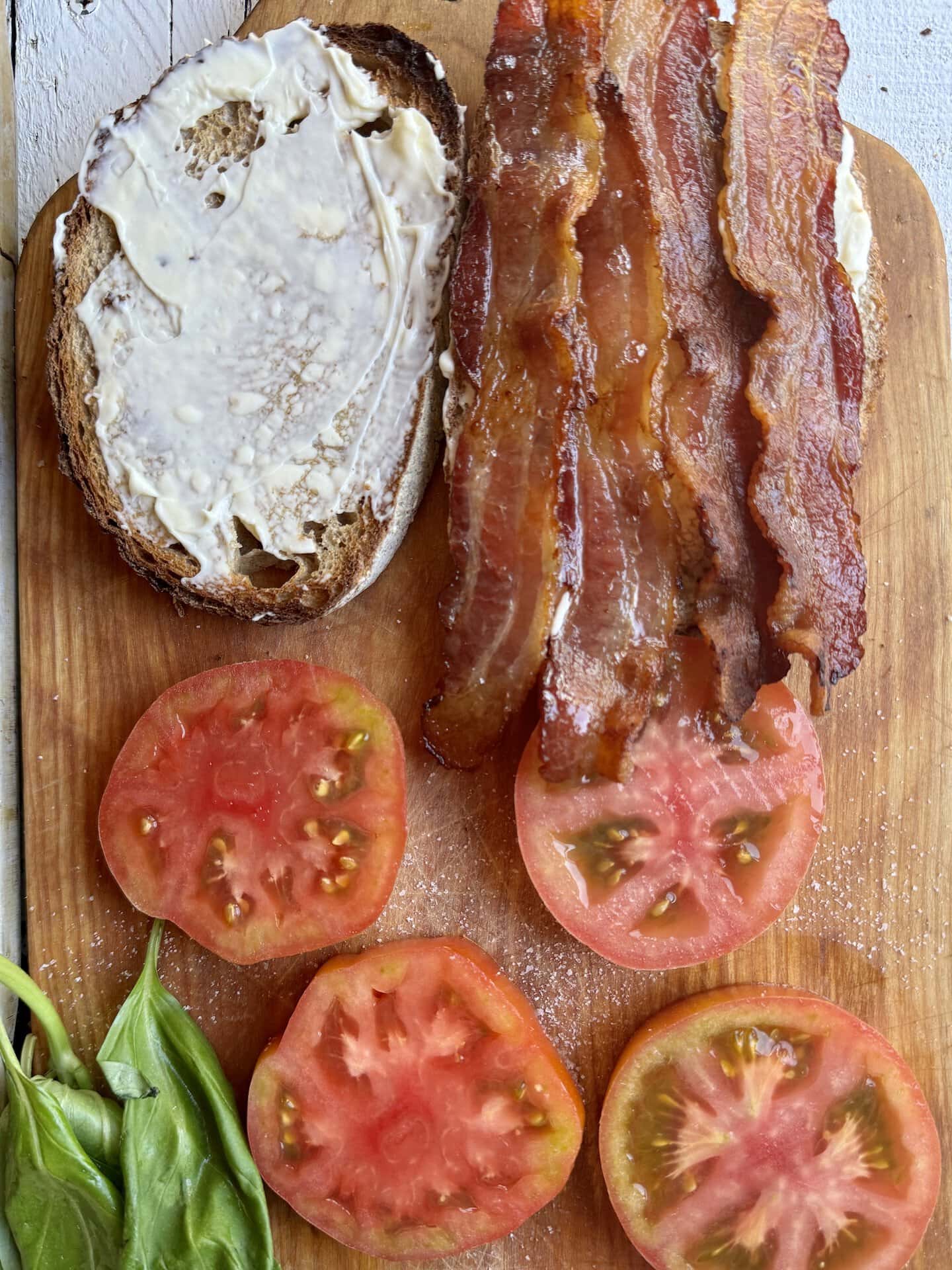
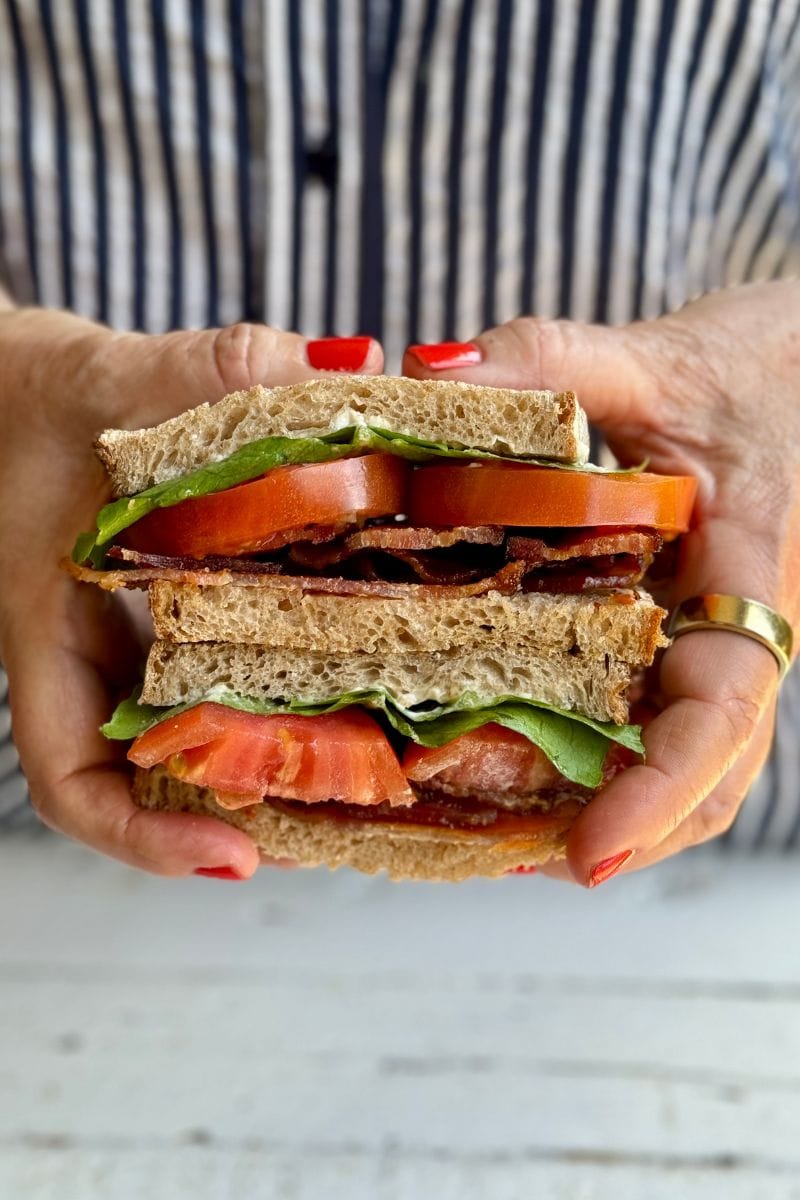
- BLT or any sandwich – Bacon in the oven creates flat, even strips that work beautifully in a sandwich and give you bacon in every single bite. I use oven bacon in every BLT I make.
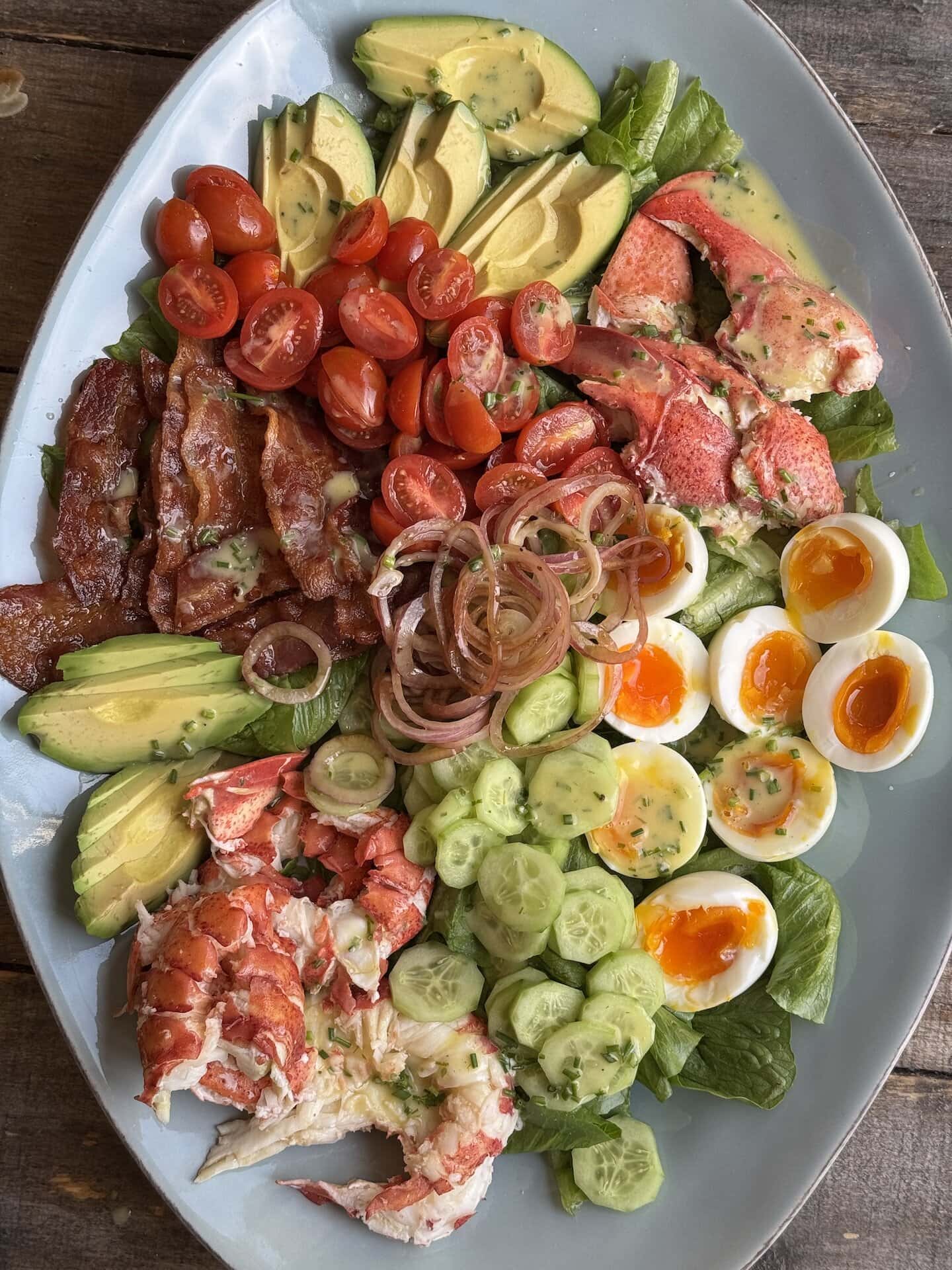
- Crumbled or chopped in salads – Crispy oven bacon is delicious in cobb salad or a wedge salad.
- In the Grinder Salad – the grinder salad jar has finely chopped oven-baked bacon. Bacon in the oven is much easier to chop than a stovetop bacon.
- Meal prep – Cook a full package on Sunday. then store in the refrigerator and use throughout the week. It is great in salads, on sandwiches, alongside eggs, or crumbled into pasta.
Recipe FAQs
400F is the ideal temperature for oven bacon. It is hot enough to render the fat and crisp the strips without burning. Some people prefer 375°F for a slower, gentler cook. This can work well for thick-cut bacon if you want a more tender result. Avoid anything above 425F, which can easily burn the bacon.
No, and this is one of the great advantages of the oven method. You get even cooking on both sides without flipping. If you are using a wire rack, air circulates beneath the bacon as well. The only time flipping is helpful is if your oven has a very hot spot and you notice one end browning faster than the other.
Yes, though cleanup will be significantly harder. Parchment paper is great because the bacon releases easily and makes cleanup simple. Foil can work, but bacon can sometimes stick to it.
There are few possible causes. The oven wasn’t fully preheated before the bacon went in, the bacon strips are overlapping, or the oven temperature is lower than the thermostat indicates. Also, check that your oven is actually reaching 400F with an oven thermometer.
Let the cooked bacon cool completely, then store in an airtight container in the refrigerator for up to 5 days. To reheat, place strips on a parchment-lined sheet pan in a 350F oven for 3-5 minutes to heat it and crisp it up.
Check Out These Other Recipes with Bacon!


If you make this Tomato Confit recipe, be sure to review it below and let me know what you think! If you’re looking for more inspiration, subscribe to my Substack, and follow along on Pinterest, Instagram, and TikTok to join in all the fun!
Oven Bacon
Ingredients
- 1 package bacon regular or thick cut
Instructions
- Preheat the oven to 400°F.
- Line a sheet pan with parchment paper.
- Spread the bacon slices out on the parchment-lined sheet pan and put it in the oven.
- Start checking around the 15-minute mark and cook until it reaches your desired crispiness.
Notes
- Regular bacon on rack: 20-25 minutes yields slightly crispier bacon
- Regular bacon on parchment: 15-20 minutes
- Thicker, wider bacon on parchment: 20-25 minutes
- All times are guidelines. Ovens vary, bacon thickness varies, and crispiness preference varies. Check at 15 minutes and pull it when it looks exactly the way you want it.
- Pull the bacon a minute before it gets too crispy, because it continues to crisp as it cools.
- An oven thermometer is highly recommended for the most consistent results.
Cooking bacon in the oven is one of those simple kitchen tricks that makes a big difference. I like that it allows the bacon to cook more evenly without having to stand over a skillet, and the cleanup can be easier too. Definitely a useful method for making a batch of crispy bacon for breakfast or meal prep. I like eating it while playing tomb of the mask
I really enjoyed this simple approach to making bacon in the oven. The method looks practical and easy to follow, especially for getting evenly cooked bacon without much effort. I also like discovering useful recipes like this while taking a break with daily puzzles such as Connections Hint Today.
Baking bacon in the oven really does make the whole process much easier and less messy. I like that it allows the bacon to cook evenly without having to stand over a hot pan or deal with grease splatters. The hands-off approach also makes it much easier to prepare other parts of a meal at the same time. After breakfast is ready, you can switch gears and try geometry dash online for a quick challenge that tests your timing and reflexes!
The tip on checking at the 15-minute mark—plus saving that rendered liquid gold fat for frying eggs or sautéing veggies—makes meal prepping breakfast for the week ridiculously easy.
Prepping a big batch of crispy bacon hands-free gives you plenty of downtime in the kitchen. While you wait for that sheet pan to finish up in the oven, taking a quick break with a fun round of meccha chameleon is a great way to pass the time and relax!
love how clearly you explained the difference between the two methods. Definitely worth trying Block Blast
Do you find that baking it in the oven gives it a better texture than cooking it in a pan? traffic jam 3d
I think they’re enough for any breakfast block blast